Post Disclaimer
Disclaimer: This content is for educational purposes only, not medical advice. Always consult with a doctor before making significant changes to your diet, especially if you have pre-existing health conditions.
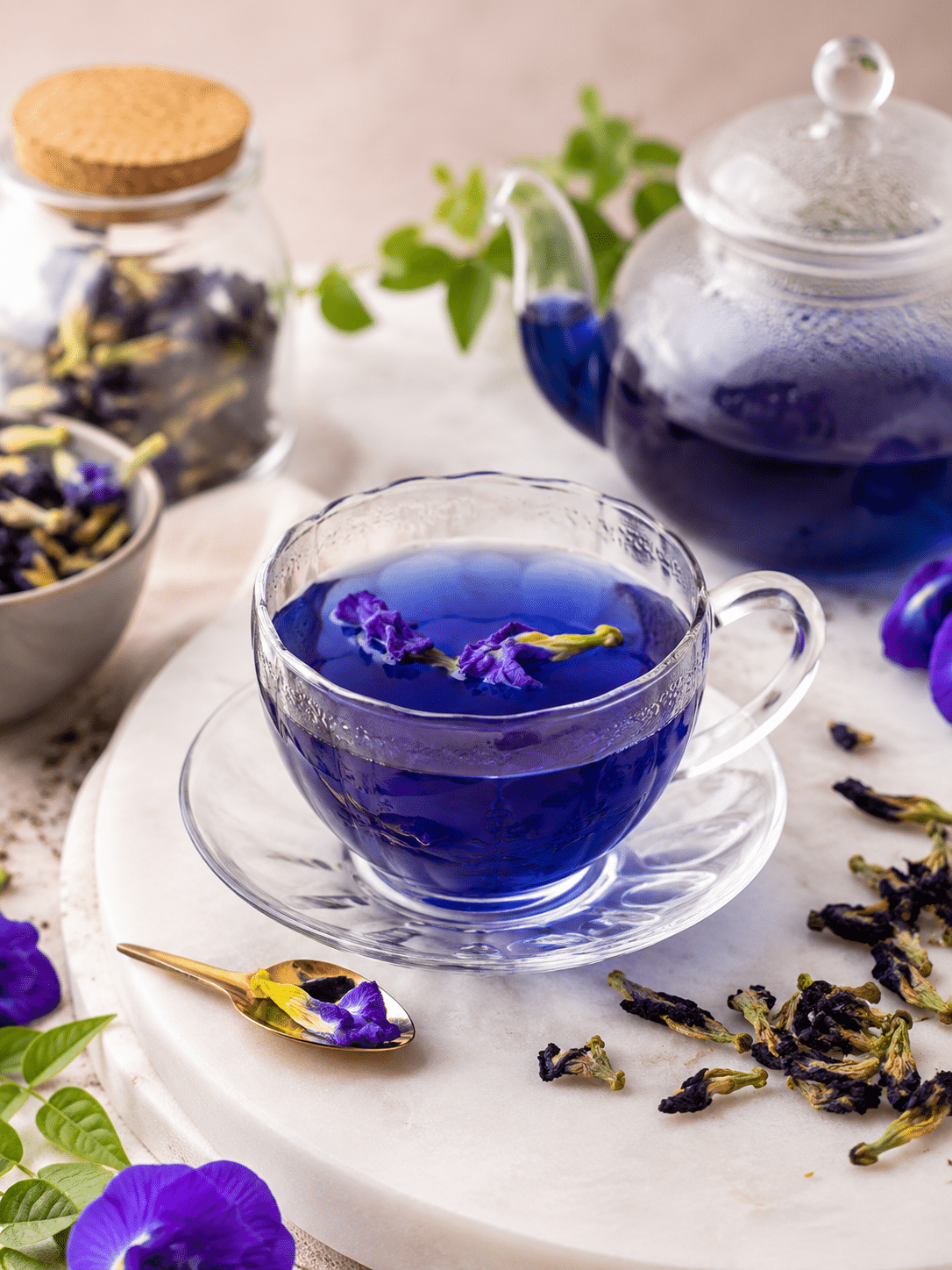
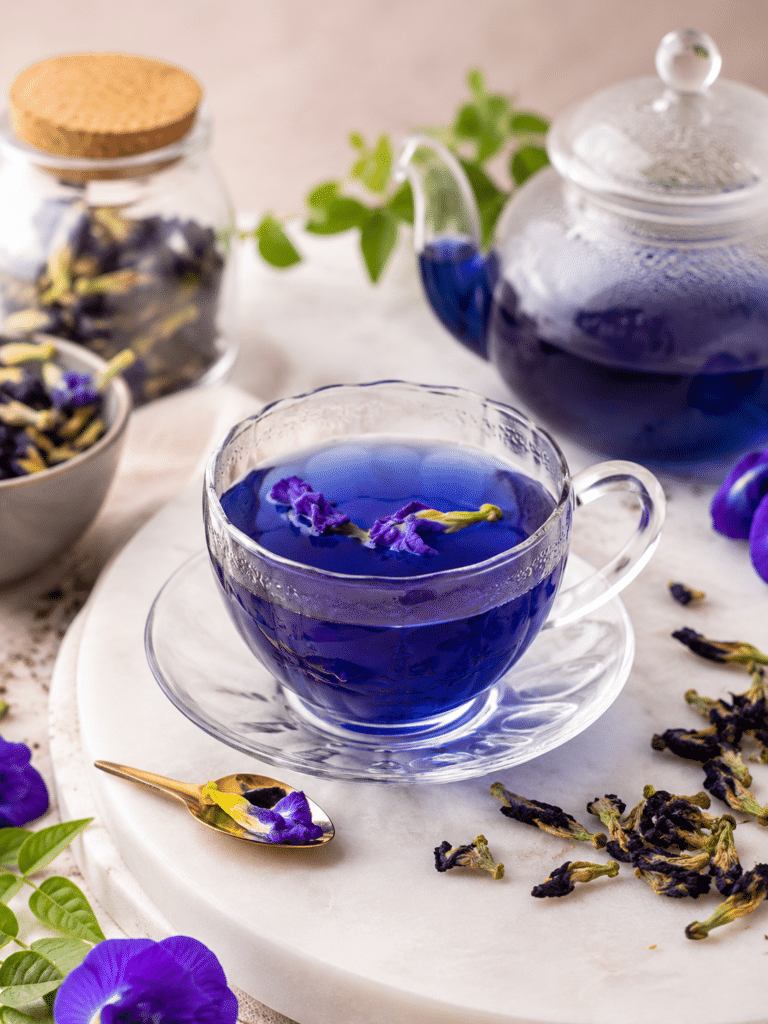
Butterfly Pea Flower Tea is a caffeine-free herbal drink made by steeping dried butterfly pea flowers in hot water, then sweetening it lightly and adding lemon for a color-changing blue-to-purple finish. It tastes earthy, mild, floral, and refreshing served hot or iced.
The first time I made Butterfly Pea Flower Tea in my kitchen, I stood over the glass like a kid watching a science trick. The water started pale, then turned deep ocean blue as the petals opened. When I squeezed in lemon, that blue shifted into a bright violet-purple, and I actually laughed. It felt fancy, but the whole thing took less effort than boiling pasta.
That’s what I love about Butterfly Pea Flower Tea. It looks like something from a café, but it’s really just dried flowers, hot water, and a little patience. The flavor stays soft and calm. It’s not sharp like black tea, not grassy like some green teas, and not perfumy in a way that takes over your mouth. Butterfly pea flower tea taste is usually described as earthy, lightly floral, and almost pea-like in the gentlest way.
After making this dozens of times for Cheflora Recipes, I’ve found the best cup comes from not overdoing it. Too many petals can make Butterfly Pea Flower Tea taste flat or woody. Too much lemon can hide its soft flavor. Too much sweetener turns it into a drink that looks pretty but loses the clean, refreshing finish that makes it special.
This is also one of those recipes that turns a quiet afternoon into a little ritual. I’ll make a hot mug when I want something soothing after dinner, or I’ll pour it over ice when the weather feels sticky and warm. When I’m serving drinks for family, I like setting out lemon wedges so everyone can watch their own glass change color. It never gets old.
One reader, Maya, told me, “I made this for my sister’s birthday brunch, and everyone thought I bought it from a tea shop.” Another reader, Ben, said he started making Butterfly Pea Flower Tea instead of his usual late-night soda because it felt special without caffeine.
I also love how naturally it fits with other bright drinks on Cheflora Recipes. When I’m planning a colorful table, I’ll serve it beside my pink lemonade recipe because the blue and pink glasses look beautiful together without needing anything fussy.
Table of Contents
Key Takeaways
- Butterfly Pea Flower Tea is naturally caffeine-free and can be served hot or iced.
- The tea turns blue when steeped and shifts purple when you add lemon or lime.
- Butterfly pea flower tea benefits are often linked to hydration, calming routines, and its naturally colorful plant compounds, but it isn’t a cure or weight-loss shortcut.
- The flavor is mild, earthy, lightly floral, and easy to pair with honey, citrus, mint, ginger, or berries.
- People who are pregnant, nursing, taking medication, or managing a health condition should ask a healthcare professional before drinking it often.
- Butterfly Pea Flower Tea Powder works too, but dried whole flowers give the cleanest homemade tea flavor.
- For the best color, steep the flowers, strain them, then add citrus right before serving.
What Is Butterfly Pea Flower Tea and Why Does It Turn Blue?
Butterfly Pea Flower Tea is an herbal infusion made from dried butterfly pea flowers. The petals steep into a vivid blue drink because they contain natural plant pigments. Add lemon juice, and the tea turns purple because those pigments react to acidity.
What makes Butterfly Pea Flower Tea different from regular tea?
Butterfly Pea Flower Tea isn’t made from black tea, green tea, or oolong leaves. It comes from the butterfly pea flower plant, often called blue pea. The plant is commonly known as Clitoria ternatea, and its flowers are famous for their bold blue color. Since this drink doesn’t come from the Camellia sinensis tea plant, it’s naturally caffeine-free unless you blend it with caffeinated tea.
That’s a big reason I reach for Butterfly Pea Flower Tea in the evening. I can drink it without feeling like I’ve signed up for a midnight kitchen-cleaning spree. The drink feels gentle, but not boring. It has a quiet flavor that works hot, iced, sweetened, unsweetened, plain, citrusy, creamy, or sparkling.
In my kitchen, I’ve found that people notice the color first and the flavor second. That’s fair. The blue is stunning. But the tea itself deserves attention too. Butterfly Pea Flower Tea has a smooth, earthy taste with a faint floral note. It doesn’t have the bitterness that can sneak into over-steeped black tea. It also doesn’t demand sugar to taste good, which makes it a nice choice when you want a pretty drink that still feels light.
Why does Butterfly Pea Flower Tea change color with lemon?
The color change is the fun part. Butterfly Pea Flower Tea starts blue because the flowers release blue pigments into the water. When you add lemon or lime juice, the drink becomes more acidic, and that acidity shifts the color toward purple or pinkish violet. It’s simple kitchen chemistry, but it looks like magic in the glass.
This is why I always add citrus after steeping and straining. When you add lemon too early, you miss the full blue moment. Let Butterfly Pea Flower Tea steep first, admire that deep color, then pour in fresh lemon juice right before serving. Kids, guests, and honestly most adults love watching it happen.
The same trick works beautifully in iced drinks. I like pouring the tea into a tall glass over ice, adding a spoonful of honey syrup, then finishing with lemon. When I’m building a whole drink table, I’ll pair it with lavender lemonade because both drinks feel floral, bright, and special without being hard to make.
How Do You Make Butterfly Pea Flower Tea at Home?
Butterfly Pea Flower Tea is made by steeping dried flowers in hot water for 5 to 7 minutes, straining, then adding honey and lemon if you like. Use fewer flowers for a lighter taste and more flowers for a deeper blue color.
What ingredients do you need for Butterfly Pea Flower Tea?
You don’t need a long grocery list. That’s the beauty of Butterfly Pea Flower Tea. You need dried butterfly pea flowers, hot water, and a sweetener if you want one. Lemon or lime is optional for flavor, but it’s what gives you the purple color shift, so I rarely skip it.
Here’s my go-to version:
| Ingredient | Amount | Notes |
|---|---|---|
| Dried butterfly pea flowers | 1 to 2 teaspoons | Use 5 to 8 whole dried flowers if not measuring |
| Hot water | 1 cup | Just off the boil works well |
| Honey or simple syrup | 1 to 2 teaspoons | Optional, adjust to taste |
| Lemon juice | 1 to 2 teaspoons | Adds tang and changes the color |
| Ice | As needed | For iced tea only |
| Mint, ginger, or berries | Optional | Great for extra flavor |
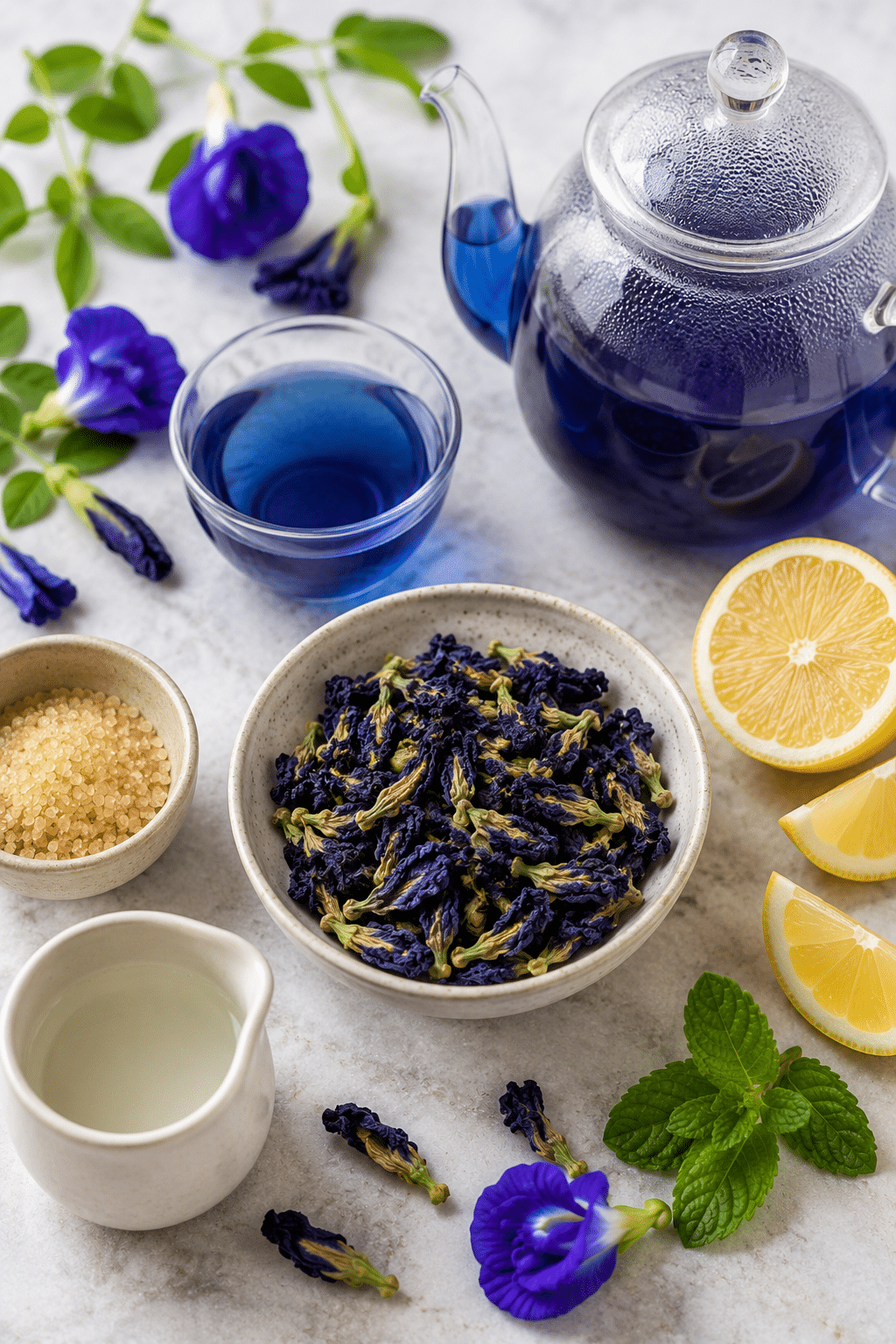
When someone asks about Butterfly pea Flower tea Powder, I tell them it works best when they want a latte, smoothie, or faster iced drink. Powder dissolves quickly, but it can taste stronger and a little more earthy than whole dried flowers. For a clean cup of Butterfly Pea Flower Tea, I prefer dried flowers because they steep gently and strain easily.
For water, use fresh filtered water when you can. It makes the color clearer and the flavor softer. If your tap water tastes strongly mineral or chlorinated, it can dull the tea’s delicate flavor. USDA’s MyPlate also encourages choosing water as a smart beverage base, which fits this recipe nicely when you want a colorful drink without turning it into a heavy dessert: Make Better Beverage Choices.
Butterfly Pea Flower Tea
Equipment
- mug or heat-safe glass
- strainer
- measuring spoons
- spoon
Ingredients
- 1–2 tsp dried butterfly pea flowers, or 5–8 whole dried flowers
- 1 cup hot water
- 1–2 tsp honey, simple syrup, or maple syrup, optional
- 1–2 tsp fresh lemon or lime juice
- ice, optional, for iced tea
- fresh mint, optional, for serving
Instructions
- Add the dried butterfly pea flowers to a mug or heat-safe glass.
- Pour 1 cup of hot water over the flowers.
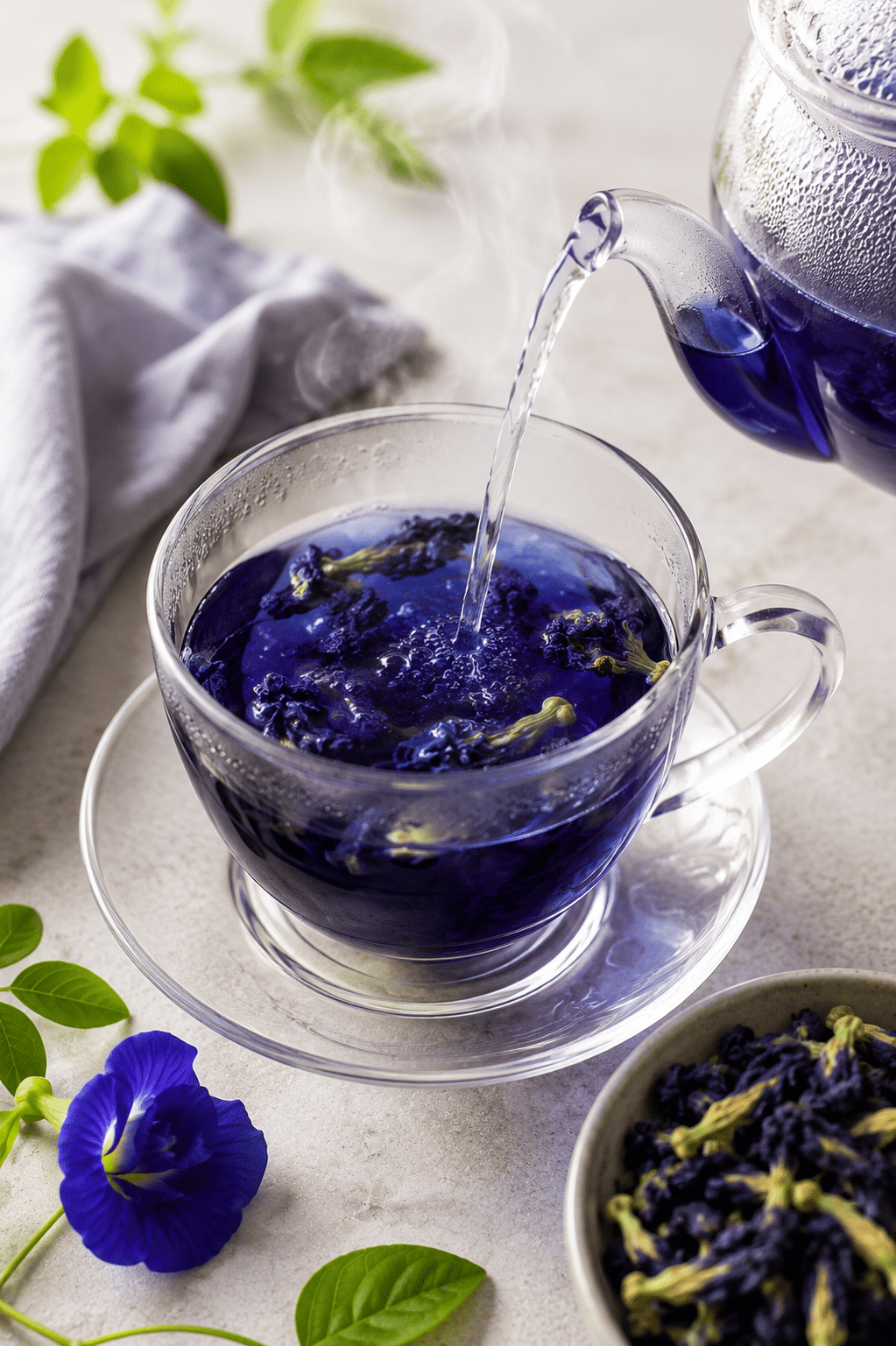
- Steep for 5–7 minutes, until the water turns a deep blue.
- Strain out the flowers.
- Stir in honey or your preferred sweetener while the tea is warm.
- Add fresh lemon or lime juice and watch the Butterfly Pea Flower Tea turn purple.
- Serve warm, or pour over ice for iced Butterfly Pea Flower Tea.
- Garnish with mint or a lemon slice, if desired.
Notes
Nutrition
What are the steps for the best Butterfly Pea Flower Tea recipe?
Start by warming your mug or glass with a splash of hot water, then pour it out. Add the dried flowers to the mug. Pour in hot water and let the Butterfly Pea Flower Tea steep for 5 minutes if you want a soft flavor, or 7 minutes if you want a deeper color. Don’t rush it, but don’t forget it either. Too long in the water can make the tea taste a little woody.
Strain the flowers, then stir in honey while the tea is still warm. Add lemon juice last and watch the color change. For iced Butterfly Pea Flower Tea, let the tea cool for a few minutes before pouring it over a full glass of ice. This keeps the ice from melting too fast and watering down the flavor.
After making this recipe for friends, I learned one small trick that helps a lot: make a stronger tea if you’re serving it iced. Ice always softens flavor. For iced glasses, use 2 teaspoons dried flowers per cup of water, then sweeten lightly. If you want a party pitcher, steep 8 teaspoons of dried flowers in 4 cups hot water, strain, chill, then serve with lemon wedges on the side.
When I want something creamy and tropical, I’ll sometimes pour chilled Butterfly Pea Flower Tea over ice with a splash of coconut milk. That version reminds me of the soft, dessert-like mood in my creamy lemonade recipe, but it still keeps the tea’s gentle floral side.
What Does Butterfly Pea Flower Tea Taste Like?
Butterfly Pea Flower Tea tastes mild, earthy, lightly floral, and smooth. It doesn’t taste strongly sweet on its own, and it doesn’t have caffeine bitterness. Lemon makes it brighter, honey makes it rounder, and mint makes it cooler.
How can you make Butterfly Pea Flower Tea taste better?
The biggest mistake is expecting Butterfly Pea Flower Tea to taste as dramatic as it looks. The color is bold, but the flavor is calm. That’s not a problem. It just means the tea loves good partners. Lemon wakes it up. Honey smooths it out. Mint gives it a clean finish. Ginger brings warmth. Berries add a soft fruit note without taking over.
In my kitchen, I’ve found that fresh lemon juice beats bottled lemon every time. Bottled juice can taste dull or harsh, and because Butterfly Pea Flower Tea has such a mild base, those rough edges stand out. Fresh citrus keeps the drink bright and clean. Lime works too, especially for iced versions.
For sweetener, I like honey in hot tea and simple syrup in iced tea. Honey doesn’t stir well into cold drinks unless you thin it first with warm water. Simple syrup blends right in. Maple syrup can work, but use a light hand because it brings a stronger flavor. Agave also works nicely.
When I’m serving brunch, I sometimes set up a little blue tea bar with lemon slices, lime wedges, mint, berries, and honey syrup. People can build their own Butterfly Pea Flower Tea and decide how purple, sweet, or tart they want it. It’s low-stress hosting, which is my favorite kind.
For a bright summer table, this tea goes beautifully with peach lemonade because peach gives that soft fruity sweetness while the blue tea brings the wow factor.
Can you serve Butterfly Pea Flower Tea hot, iced, or sparkling?
Yes, and each version has its own mood. Hot Butterfly Pea Flower Tea feels quiet and cozy. I like it after dinner when I want something warm but caffeine-free. Iced Butterfly Pea Flower Tea feels crisp and refreshing, especially with lemon and mint. Sparkling Butterfly Pea Flower Tea feels party-ready with almost no effort.
For a sparkling version, steep the tea strong, chill it, then pour half tea and half sparkling water over ice. Add sweetener before the sparkling water so you don’t stir away all the bubbles. Finish with lemon and watch the color shift in the glass. This is one of my favorite nonalcoholic drinks for celebrations because it looks festive without needing anything complicated.
You can also make a layered drink. Fill a glass with ice, add chilled Butterfly Pea Flower Tea, then slowly pour lemonade over the top. The colors swirl together in the prettiest way. It’s not perfectly layered forever, but that’s part of the charm. It looks alive.
For a party pitcher, I like keeping the tea and citrus separate until serving. Make the blue tea ahead, chill it, and place lemon juice or lemonade beside it. Guests can pour their own and enjoy the color change fresh. For a bigger drink spread, my lemonade bar recipes give you easy ideas for fruit, herbs, and syrups that also work with this tea.
What Are Butterfly Pea Flower Tea Benefits and Safety Tips?
Butterfly pea flower tea benefits may include helping you drink more fluids, giving you a caffeine-free evening option, and adding natural plant color to your routine. It’s not a medicine, and people with health concerns should ask a professional before drinking it often.
What are the real Butterfly pea flower tea benefits?
Let’s be honest about Butterfly Pea Flower Tea. It’s lovely, it’s soothing, and it can help you build a calmer drink habit, but it isn’t a magic fix. Some people talk about butterfly pea flower tea benefits because the flowers contain natural plant compounds called anthocyanins, the same broad pigment family that gives many blue and purple plants their color. That doesn’t mean one cup will change your health overnight.
What I do appreciate is how Butterfly Pea Flower Tea can replace drinks that leave you feeling jittery or overly sugared. Because it’s caffeine-free, you can sip it in the afternoon or evening. Because it has a mild taste, you can enjoy it without dumping in lots of sugar. Because it looks beautiful, it feels like a treat even when you keep it simple.
This matters in real life. When a drink feels plain, people often skip it. When it feels special, they come back to it. Butterfly Pea Flower Tea makes hydration more inviting, especially for people who get bored with plain water. That’s a practical benefit, not an exaggerated one.
I also like that you control every part of the cup. You decide the sweetness. You decide the citrus. You decide whether to drink it warm or iced. That makes it easier to fit into your day without feeling forced. If you already love colorful, refreshing drinks, you might also enjoy my Brazilian lemonade recipe for a creamy citrus option on another day.
Who should be careful with Butterfly Pea Flower Tea?
Most healthy adults can enjoy Butterfly Pea Flower Tea in normal food-style amounts, but not everyone should drink it often without asking a healthcare professional. If you’re pregnant, nursing, taking medication, preparing for surgery, or managing a medical condition, check first. That’s especially true for anyone searching Butterfly pea flower tea pregnancy, because pregnancy safety information for many herbal drinks can be limited.
I don’t recommend using Butterfly Pea Flower Tea as a treatment for any health problem. It’s a recipe, not a prescription. Keep your serving modest, pay attention to how your body feels, and stop drinking it if it doesn’t agree with you. Some people may notice stomach discomfort with herbal drinks, especially if they drink a lot at once or steep them very strong.
For teens and younger kids, I’d keep servings small and occasional unless a parent or doctor says otherwise. The color makes it fun, but it’s still an herbal drink. When serving a group, label it clearly so people know what they’re drinking.
When readers ask about Butterfly Pea Flower Tea near me or Butterfly Pea Flower tea where to buy, I always suggest choosing food-grade dried flowers from a trusted tea shop, spice shop, or grocery source. Avoid flowers meant for crafts, décor, or garden use, because those aren’t meant for drinking.
Where Can You Buy Butterfly Pea Flower Tea and How Should You Store It?
You can buy Butterfly Pea Flower Tea online, in tea shops, in some Asian markets, and sometimes in natural grocery stores. Look for food-grade dried flowers or powder, check the ingredient list, and store it airtight away from heat and light.
What should you look for when buying Butterfly Pea Flower Tea?
When buying Butterfly Pea Flower Tea, start with the label. You want food-grade dried butterfly pea flowers, ideally with no added dyes, artificial fragrance, or mystery blends unless you know what each ingredient is. The flowers should look deep blue to blue-purple, not dusty gray. A little variation is normal, but a dull color may mean they’re old.
Some people search Butterfly Pea Flower tea Bigelow because they want a familiar grocery-store brand. Availability can change by store and region, so check the tea aisle, brand site, or online grocery listings. You may also find blends that combine butterfly pea with citrus, lemongrass, ginger, or green tea. Read the label if caffeine matters to you, because a blend may not be caffeine-free.
Butterfly Pea Flower tea Powder is a good pick for smoothies, lattes, frostings, or quick iced drinks. Whole dried flowers are better when you want a classic steeped tea. Powder can clump, so whisk it with a small splash of warm water before adding more liquid. Whole flowers simply need steeping and straining.
For local shopping, try searching Butterfly Pea Flower Tea near me and check tea shops, Asian markets, health food stores, and spice shops. For online shopping, search Butterfly Pea Flower tea where to buy and choose sellers with clear food-grade labeling and recent customer reviews. I avoid products that make wild health promises. Good tea doesn’t need those.
How do you store Butterfly Pea Flower Tea for fresh flavor?
Store dried flowers in a sealed jar or pouch in a cool, dark cabinet. Keep them away from steam, sunlight, and strong-smelling spices. Tea absorbs odors more easily than people think. If you store Butterfly Pea Flower Tea beside garlic powder or smoky spices, don’t be shocked if your next cup tastes a little strange.
Once opened, I try to use dried flowers within 6 to 12 months for the best color and flavor. They may not spoil right away if kept dry, but the blue color can fade and the taste can become flat. If the flowers smell musty, look damp, or show any signs of mold, toss them.
Prepared Butterfly Pea Flower Tea can be kept in the fridge for about 2 to 3 days in a covered jar. For the prettiest color, store it without lemon and add citrus right before serving. The tea may darken or shift in the fridge, especially if you already added lemon. It’s still often fine, but fresh color is always prettier.
When I’m meal-prepping drinks, I make a small jar of concentrated tea and use it through the week. A splash can tint lemonade, sparkling water, or even a latte. For a cool café-style pairing, try serving a small glass beside coconut iced coffee when you want one bright herbal drink and one creamy coffee drink on the table.
FAQ
What does butterfly pea flower tea good for?
Butterfly Pea Flower Tea is good for anyone who wants a caffeine-free herbal drink that feels special without being hard to make. It can be a nice choice when you’re trying to drink more fluids, cut back on sugary beverages, or enjoy a calming evening routine. Many people are interested in butterfly pea flower tea benefits because the flowers have natural blue plant pigments, but it’s best to keep the claims realistic. This tea is not a cure for health problems. Think of it as a beautiful homemade drink that may help you build a gentler sipping habit. Add lemon for brightness, honey for softness, or mint for a cooler finish.
Who should not drink butterfly pea tea?
People who are pregnant, nursing, taking prescription medication, preparing for surgery, or managing a health condition should ask a healthcare professional before drinking Butterfly Pea Flower Tea often. Anyone with allergies to herbal products should also be careful and start with a small amount, or skip it if they’re unsure. Kids and teens should treat it like an occasional herbal drink, not an everyday health product. If you feel nausea, stomach discomfort, itching, or anything unusual after drinking it, stop and check with an adult or clinician. Butterfly Pea Flower Tea can be lovely, but “natural” doesn’t always mean right for every person.
Can we drink blue pea tea daily?
Many adults can drink blue pea tea daily in modest amounts, but daily use depends on your body, health, and overall diet. One cup of Butterfly Pea Flower Tea a day is very different from drinking several strong cups and expecting health results. Keep it simple, don’t over-steep it, and avoid loading it with sugar. If you’re pregnant, nursing, taking medication, or dealing with a medical condition, ask a healthcare professional before making it a daily routine. For most people, it works best as one drink in a varied day, not as the main source of fluids or a health shortcut.
Does butterfly pea flower tea make you sleepy?
Butterfly Pea Flower Tea doesn’t usually make you sleepy like a sleep medicine would, but it can fit nicely into a calming bedtime routine because it’s naturally caffeine-free. A warm mug may help you slow down simply because the ritual feels quiet and comforting. The effect is more about habit, warmth, and the lack of caffeine than a strong sedating action. If you’re sensitive to nighttime liquids, drink it earlier in the evening so you’re not waking up to use the bathroom. I like it after dinner with a little honey and lemon when I want something cozy but not heavy.
How often should I drink butterfly pea tea?
A good starting point is 2 to 4 times per week, then see how you like it. If Butterfly Pea Flower Tea agrees with you, one modest cup a day may be fine for many healthy adults. Keep your serving balanced, especially if you add honey or syrup. Stronger isn’t always better; a gentle steep tastes cleaner and looks prettier. If you use Butterfly Pea Flower tea Powder, follow the package serving suggestion because powders can be more concentrated than whole flowers. For variety, rotate it with other caffeine-free drinks, lemonade, infused water, or plain water so your routine doesn’t feel repetitive.
Does blue pea tea reduce belly fat?
No, Butterfly Pea Flower Tea does not directly reduce belly fat. No single tea can target fat from one area of the body. Unsweetened or lightly sweetened blue pea tea may support a balanced routine if it replaces high-sugar drinks, but that’s about overall habits, not a special fat-burning effect. Be careful with products or posts that promise dramatic weight loss from Butterfly Pea Flower Tea. A realistic approach includes regular meals, movement you can maintain, sleep, and drinks that don’t add lots of extra sugar. Enjoy this tea for its color, flavor, and caffeine-free comfort, not as a belly-fat fix.
Conclusion
Butterfly Pea Flower Tea is one of those recipes that reminds me why simple kitchen moments matter. A few dried flowers, hot water, lemon, and honey can turn into something gorgeous enough for a brunch table but easy enough for a regular Tuesday night. It’s calming, colorful, caffeine-free, and flexible, which makes it a recipe I come back to again and again.
The best version starts with good food-grade flowers, fresh water, a short steep, and fresh lemon added at the end. Keep the sweetness light so the earthy floral flavor still comes through. Serve it hot when you want comfort, iced when you want refreshment, and sparkling when you want something festive. If you’re already a homemade drink person, this tea fits right in beside matcha latte iced or cold brew coffee recipe days.
Most of all, don’t overthink it. Make the tea, watch the color change, taste, adjust, and enjoy the little surprise in your glass. Try Butterfly Pea Flower Tea this week and make it your own.