Post Disclaimer
Disclaimer: This content is for educational purposes only, not medical advice. Always consult with a doctor before making significant changes to your diet, especially if you have pre-existing health conditions.
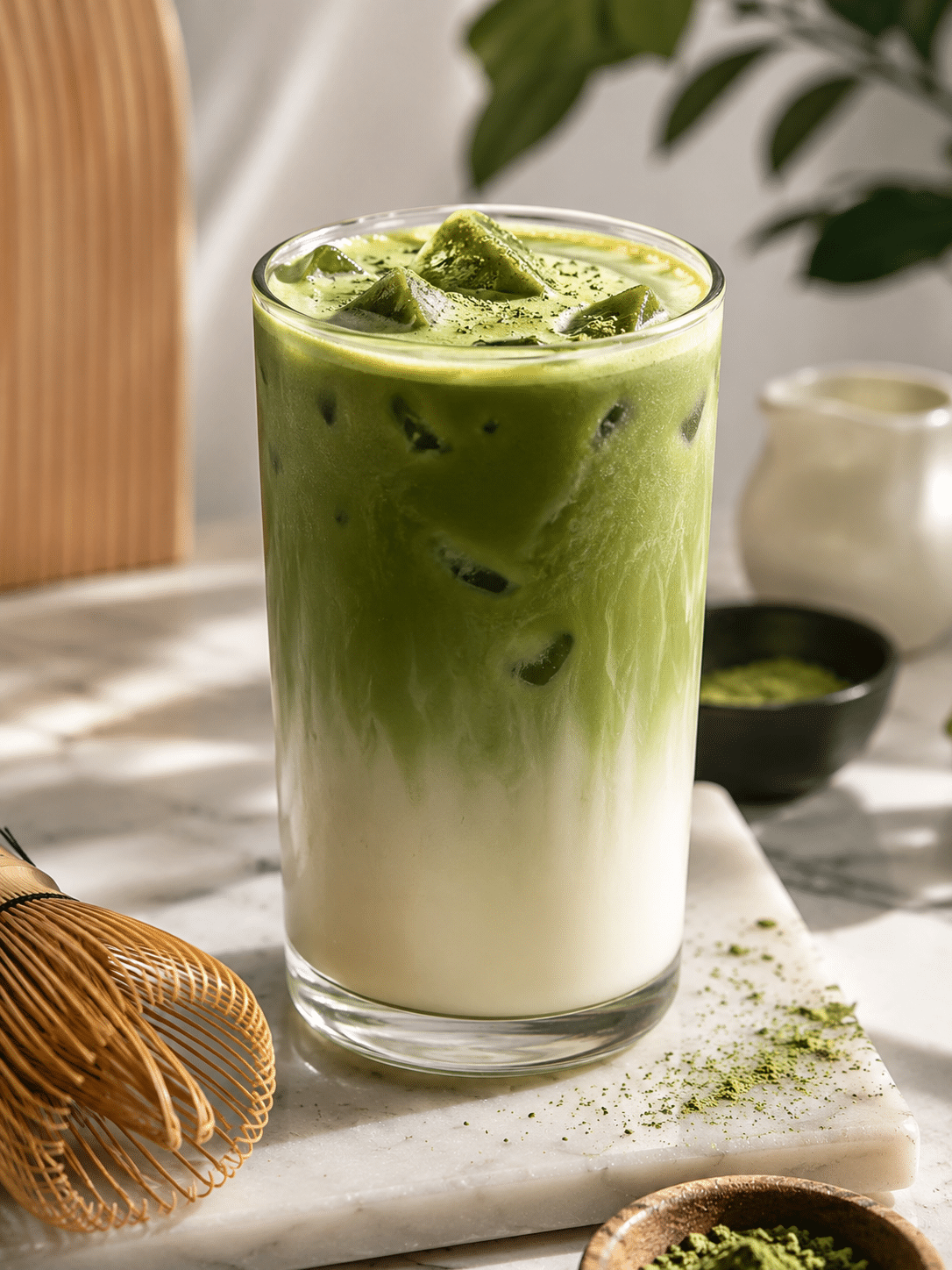
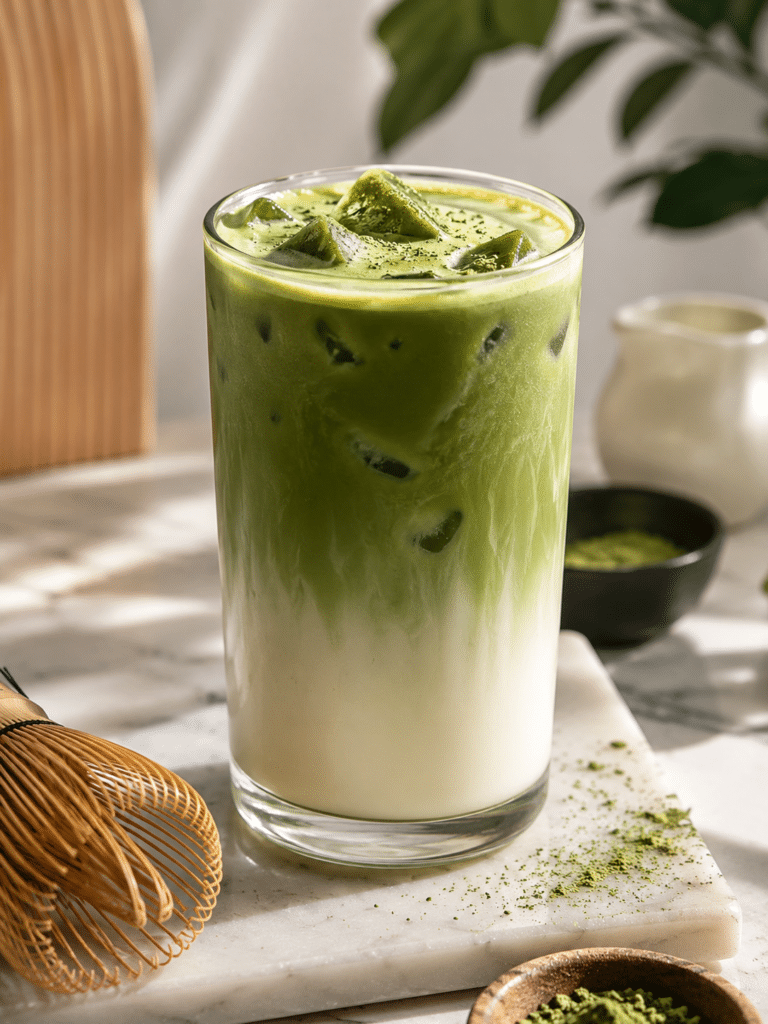
Matcha latte iced is a cold, creamy green tea drink made with matcha powder, milk, ice, and a little sweetener. This homemade version tastes smooth, fresh, and lightly earthy, with better control over sugar, caffeine, and cost than most café cups.
Why do I make matcha latte iced at home?
The first time I made matcha latte iced in my kitchen, I was standing barefoot by the counter with a glass full of ice, a tiny bamboo whisk, and a carton of oat milk I needed to use up. I had been buying café matcha drinks for weeks, and while I loved the creamy chill and that pretty green color, I didn’t love guessing how sweet they were. I wanted something calmer, cleaner, and still fun enough to feel like a treat.
That’s where this Matcha latte iced recipe became a regular in my house. It’s the kind of drink you can make in five minutes, but it still feels special. The matcha blooms into a deep grassy green when you whisk it with warm water, the milk softens the earthy edge, and the ice makes everything crisp. When I’m craving something bright but not fruity, this is the glass I reach for.
Matcha itself is a finely ground green tea powder, and Wikipedia describes matcha as a powdered green tea used in traditional Japanese tea preparation. In a latte, that powder gets mixed directly into the drink instead of steeped and removed like tea leaves. That’s why Matcha latte iced has a fuller body, stronger color, and a more rounded flavor than a basic iced green tea.
In my kitchen, I’ve found the biggest difference between an okay drink and the best iced matcha recipe comes down to three small things: sift the powder, whisk it with warm water first, and choose milk that tastes good cold. You don’t need a fancy setup, though a bamboo whisk is helpful. A small jar with a lid, handheld frother, or mini whisk can all get the job done.
One reader, Maya, told me, “I stopped buying café matcha after making this because I could finally taste the matcha instead of just sugar.” Another reader, Tessa, said she used almond milk and vanilla syrup, then served it next to brunch with my homemade iced tea recipe for friends. That’s exactly how I like recipes to work: simple enough for Tuesday, pretty enough for company.
Matcha latte iced also gives you room to play. You can make it barely sweet, dessert-like, dairy-free, extra creamy, or layered like a coffee shop drink. And because you’re making it yourself, the iced matcha latte price usually comes way down compared with buying one out.
Table of Contents
Key takeaways
- Matcha latte iced tastes best when the powder gets whisked with warm water before it meets cold milk.
- Sifting matcha helps prevent clumps and gives the drink a smoother café-style texture.
- One serving usually has moderate caffeine, often less than a strong coffee but more than many herbal drinks.
- You control the sweetness, so iced matcha latte nutrition can be lighter than many store-bought versions.
- Dairy milk, oat milk, almond milk, coconut milk, and soy milk all work, but oat milk gives the creamiest finish.
- Matcha latte iced pairs beautifully with lemony, minty, coconut, and berry drinks when you’re setting up a drink bar.
What is Matcha latte iced and why does it taste so good?
Matcha latte iced is a chilled green tea latte made by whisking matcha powder with warm water, then pouring it over ice with cold milk and sweetener. The flavor tastes creamy, grassy, lightly sweet, and refreshing, with a gentle caffeine lift and a smooth finish.
What makes matcha different from regular green tea?
Regular green tea usually starts with tea leaves steeped in hot water, then removed. Matcha works differently because the powdered tea goes right into your glass. That means Matcha latte iced has a richer color, a fuller mouthfeel, and a stronger tea flavor than a basic iced green tea. You’re drinking the actual powdered leaf, not just an infusion, so the drink feels more concentrated and satisfying.
After making this dozens of times, I’ve learned that matcha quality matters, but it doesn’t need to be the most expensive tin in the store. Ceremonial grade tastes softer and brighter, while culinary grade can work well in lattes because milk and sweetener round out the flavor. For Matcha latte iced, choose a matcha that smells fresh, looks bright green, and tastes pleasantly earthy instead of dull or bitter.
This is also where people start comparing homemade drinks with iced matcha from Starbucks. A café version can be tasty, but it may use a pre-sweetened matcha blend depending on the location and menu. At home, you decide whether your Matcha latte iced gets maple syrup, honey, vanilla syrup, monk fruit sweetener, or no sweetener at all. That one choice changes the whole drink.
If you’re making a summer drink spread, Matcha latte iced gives you a creamy option next to brighter drinks like my virgin mojito recipe. The mint and lime in that mocktail make a nice contrast when guests want something sparkling while you want something soft and milky.
What ingredients do you need?
You only need matcha powder, warm water, cold milk, ice, and sweetener. The warm water matters because it helps the matcha dissolve before you add cold ingredients. Cold milk alone can leave clumps, and nobody wants little green specks floating around in a drink that should feel silky.
| Ingredient | Amount | Chef Lora’s note |
|---|---|---|
| Matcha powder | 1 to 1 1/2 teaspoons | Sift it first for the smoothest drink |
| Warm water | 2 tablespoons | Use warm, not boiling, water |
| Sweetener | 1 to 2 teaspoons | Maple syrup, honey, or vanilla syrup work well |
| Cold milk | 3/4 to 1 cup | Oat milk makes it extra creamy |
| Ice | 1 cup | Use plenty so the drink stays chilled |
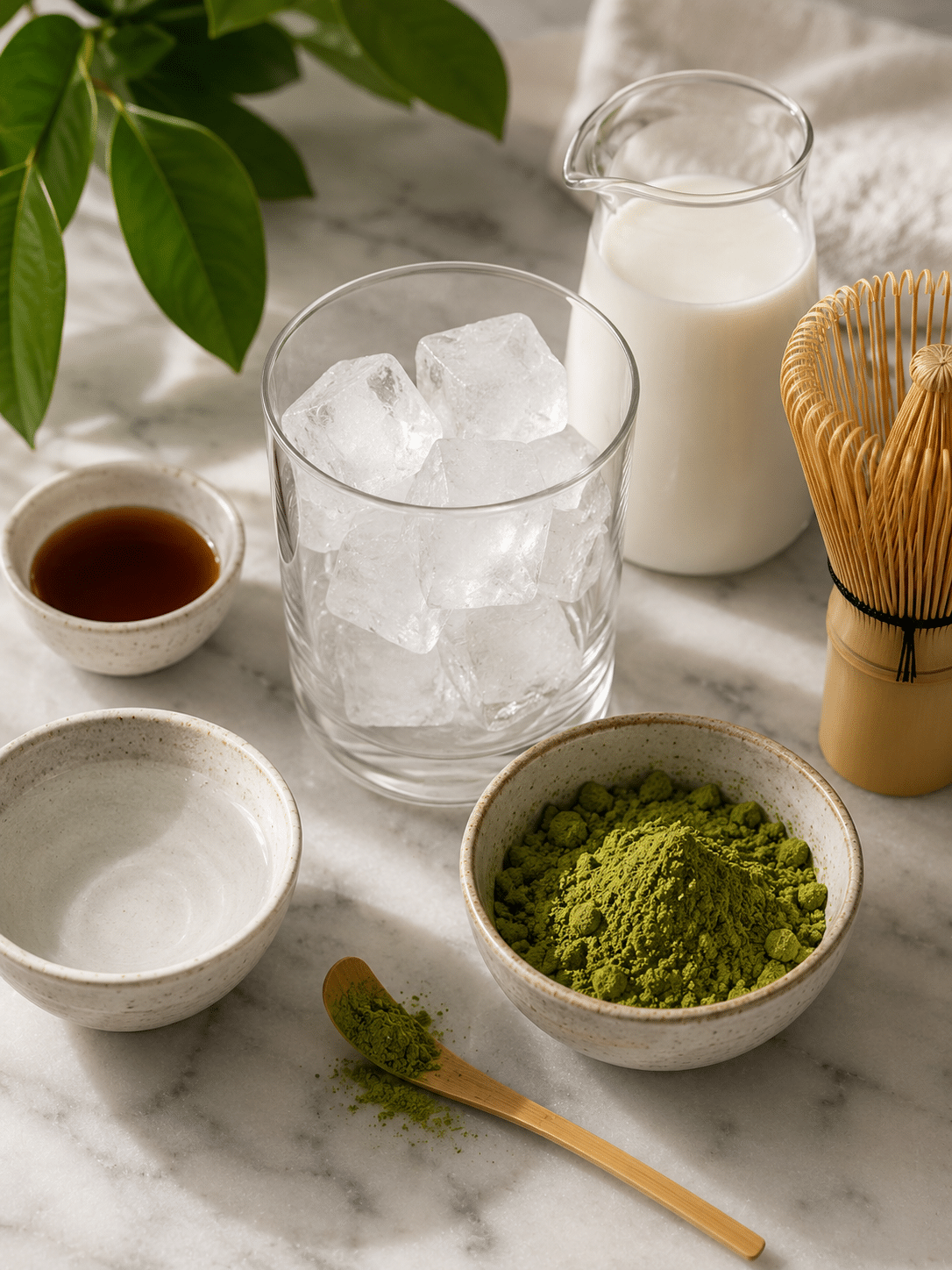
For a classic Matcha latte iced, I use 1 teaspoon matcha, 2 tablespoons warm water, 1 teaspoon maple syrup, 3/4 cup oat milk, and a full glass of ice. That gives me an iced creamy pure matcha latte without making it taste heavy. When I want a stronger tea flavor, I add another half teaspoon of matcha and a splash more milk.
How do you make the best Matcha latte iced at home?
The best Matcha latte iced starts with sifted matcha, warm water, and steady whisking. Mix the matcha into a smooth paste first, sweeten it while it’s loose, then pour it over ice and cold milk. This keeps the drink creamy instead of clumpy.
How do you whisk matcha without clumps?
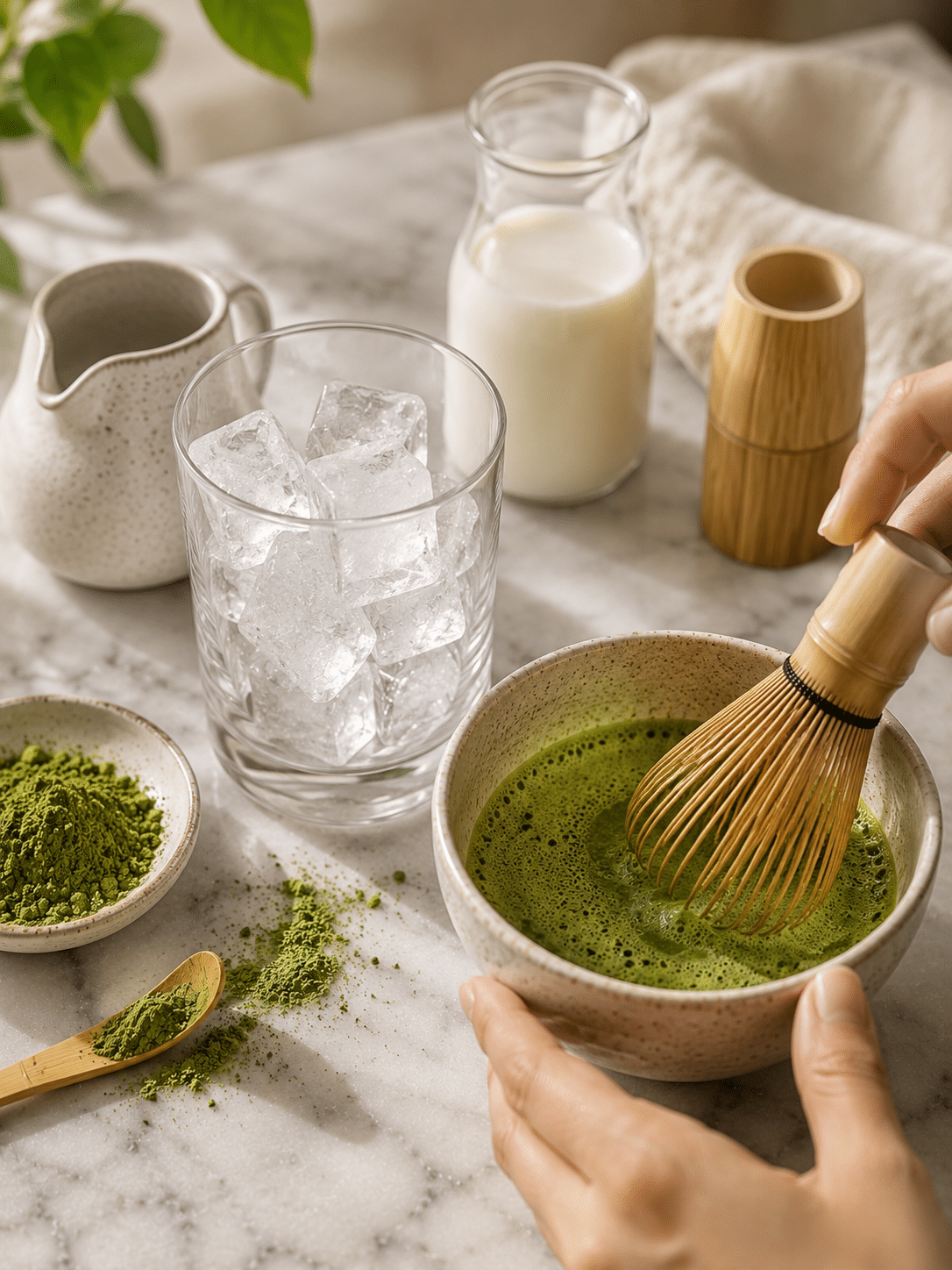
Clumps are the one thing that can make Matcha latte iced feel homemade in the wrong way. The fix is easy: sift your matcha into a small bowl or cup before adding water. I know it feels like an extra step, but it takes ten seconds and saves you from chasing green lumps with a spoon. Once the powder is sifted, add warm water and whisk in quick zigzags until the top looks a little foamy.
The water should feel warm, not boiling. Very hot water can pull out a harsh bitter taste, especially from lower-grade matcha. In my kitchen, I let boiled water sit for a few minutes before using it, or I mix a splash of hot water with a splash of cool water. You don’t need a thermometer for Matcha latte iced unless you enjoy that kind of precision. Just avoid water that’s steaming aggressively.
A bamboo whisk gives the finest foam, but a handheld frother works fast and makes the drink feel modern and café-like. A jar also works. Add sifted matcha, warm water, and sweetener, then shake hard until smooth. That jar method is great for school mornings, work breaks, or any day when you don’t want to wash a whisk.
Once your matcha base is smooth, fill a glass with ice, pour in milk, then slowly pour the matcha over the top. This gives Matcha latte iced that beautiful green swirl. It tastes the same if you stir it right away, but I always pause for a second because the layers are half the joy.
For a fruity drink table, I like serving this next to my strawberry lemonade mocktail. The berry tartness keeps the creamy matcha from feeling too rich.
What is the exact recipe?
Here’s the simple method I use most often for Matcha latte iced.
| Step | What to do |
|---|---|
| 1 | Sift 1 to 1 1/2 teaspoons matcha into a small bowl |
| 2 | Add 2 tablespoons warm water |
| 3 | Whisk until smooth and lightly foamy |
| 4 | Stir in 1 to 2 teaspoons sweetener |
| 5 | Fill a glass with ice |
| 6 | Add 3/4 to 1 cup cold milk |
| 7 | Pour matcha over the milk, stir, and sip |
For the best iced matcha recipe, taste before adding more sweetener. Matcha has a natural grassy note, and a little sweetness can make it taste rounder, but too much can cover the tea completely. I usually start small, stir, taste, and adjust. That tiny pause helps you get a Matcha latte iced that tastes like yours, not a copy of someone else’s café order.
What milk, sweetener, and flavor ideas work best?
Matcha latte iced works with dairy milk or plant milk, but oat milk gives the creamiest texture. Vanilla, maple, honey, coconut, strawberry, lavender, and mint all pair well with matcha. Keep flavors gentle so the tea still comes through.
Which milk gives the creamiest finish?
Whole milk gives Matcha latte iced a classic creamy body, but oat milk is my personal favorite because it tastes naturally sweet and blends into matcha without stealing the show. Almond milk makes a lighter drink, coconut milk brings a tropical feel, and soy milk adds a thicker, protein-rich texture. Cashew milk also works nicely if you like a softer, buttery finish.
The key is choosing a milk you already enjoy cold. Some milks taste fine in coffee but a little flat in matcha. Since Matcha latte iced has fewer bold roasted notes than coffee, the milk flavor stands out more. That’s why barista-style oat milk works so well. It feels lush, pours smoothly, and makes the drink taste like something you paid for.
For a more dessert-style glass, use 3/4 cup milk and 1/4 cup half-and-half or canned light coconut milk. That gives you an iced creamy pure matcha latte with a richer sip. For a lighter afternoon drink, use unsweetened almond milk and a small spoonful of honey or maple syrup. Both versions still feel refreshing over ice.
If you’re serving Matcha latte iced with tropical snacks, coconut milk tastes great beside my mango frozen drink. The mango brings sunshine and sweetness, while the matcha gives that cool, green, creamy balance.
I also like a pinch of salt in creamy drinks. Not enough to taste salty, just a tiny pinch to pull the milk and matcha together. It’s the same trick I use in hot cocoa and smoothies. It makes Matcha latte iced taste fuller without adding extra sugar.
What are easy iced matcha latte ideas?
Here are a few iced matcha latte ideas that keep the recipe fresh without turning it complicated.
| Variation | How to make it |
|---|---|
| Vanilla matcha | Add 1 teaspoon vanilla syrup or a few drops vanilla extract |
| Strawberry matcha | Spoon strawberry puree into the glass before adding ice |
| Coconut matcha | Use coconut milk and a small splash of lime |
| Honey matcha | Sweeten the warm matcha base with honey |
| Lavender matcha | Use lavender syrup and oat milk |
| Mint matcha | Muddle mint in the glass before adding ice |
| Dirty matcha | Add a small shot of espresso for a stronger café drink |
For Matcha latte iced with fruit, keep the fruit layer simple. Strawberries, blueberries, mango, and peach work best when lightly mashed or blended. You don’t need much, maybe 2 tablespoons in the bottom of the glass. Add ice, milk, and matcha, then stir. The result tastes playful but still balanced.
When I make a pitcher of drinks for family, I’ll often set up one creamy option and one punchy fruit option. Matcha latte iced sits beautifully next to my fruit punch recipe because the colors look gorgeous together and the flavors don’t compete.
Matcha latte iced
Equipment
- small bowl or cup
- matcha whisk or small whisk
- fine mesh sieve
- tall serving glass
- measuring spoons
Ingredients
- 1 to 1 1/2 teaspoons matcha powder
- 2 tablespoons warm water
- 1 to 2 teaspoons maple syrup, honey, or vanilla syrup
- 3/4 to 1 cup cold milk or oat milk
- 1 cup ice
Instructions
- Sift the matcha powder into a small bowl or cup.
- Add the warm water.
- Whisk quickly until the matcha looks smooth and lightly foamy.
- Stir in the maple syrup, honey, or vanilla syrup.
- Fill a tall glass with ice.
- Pour the cold milk over the ice.
- Slowly pour the matcha mixture over the milk.
- Stir before drinking, or leave it layered for a pretty café-style look.
Notes
Nutrition
What should you know about caffeine, sugar, GERD, and gluten?
Matcha latte iced usually contains caffeine, often around 60 to 80 milligrams per serving depending on how much powder you use. It can be low in sugar when homemade, gluten-free when made with safe ingredients, and GERD-friendly for some people, though caffeine may bother others.
How much caffeine is in an iced matcha latte?
Iced matcha latte caffeine content depends on the amount and type of matcha. A common homemade serving with 1 to 1 1/2 teaspoons matcha often lands in a moderate caffeine range. It usually feels gentler than a strong coffee for many people, but it’s still real caffeine. That matters if you’re sensitive to caffeine, drinking it late in the day, or making it for someone younger.
Matcha also contains L-theanine, an amino acid often linked with a calmer feeling compared with the sharper jolt some people get from coffee. That’s one reason people describe Matcha latte iced as focused or smooth. Still, everyone reacts differently. Some people feel alert and steady. Others feel jittery if they drink it too fast or on an empty stomach.
If caffeine makes your heart race, worsens anxiety, interrupts sleep, or bothers your stomach, keep your Matcha latte iced small and sip it with food. You can also use 1/2 teaspoon matcha instead of a full teaspoon. That makes a lighter drink with the same flavor style. I do this in the late afternoon when I want the ritual but not too much caffeine.
For warm weather sipping, I sometimes pair a smaller Matcha latte iced with a no-caffeine refresher like cucumber mint water. It gives me the creamy matcha moment first, then something crisp and clean to sip after.
Is matcha latte iced high in sugar?
Homemade Matcha latte iced is only high in sugar if you make it that way. The matcha itself doesn’t need sugar, but many café drinks use sweetened powders, syrups, or sweetened milk. At home, you can keep the sweetness gentle. One teaspoon maple syrup adds just enough roundness for many people, while two teaspoons tastes more like a café treat.
Here’s a simple iced matcha latte nutrition guide for one homemade serving.
| Version | Sweetener | Milk | Flavor |
|---|---|---|---|
| Light | 0 to 1 teaspoon | Unsweetened almond milk | Fresh, grassy, mild |
| Classic | 1 to 2 teaspoons | Oat milk or dairy milk | Creamy and balanced |
| Dessert-style | 1 tablespoon syrup | Oat milk plus cream | Sweet and rich |
| Fruit matcha | 1 teaspoon plus fruit | Any milk | Bright and creamy |
For GERD, Matcha latte iced can go either way. It’s less acidic-tasting than coffee, which some people like, but it still contains caffeine, and caffeine can trigger reflux symptoms for some. Try a small serving, use low-fat or plant milk if richer dairy bothers you, and skip heavy syrups. For celiac concerns, plain matcha should not contain gluten, but flavored powders or café mixes may have cross-contact risks. The FDA’s gluten-free labeling rule says foods labeled gluten-free must meet its gluten limit, so choose clearly labeled products when gluten is a serious concern.
How much does Matcha latte iced cost and how do you serve it?
Matcha latte iced usually costs far less at home than at a café. Once you buy matcha, milk, and sweetener, each glass often costs a small fraction of a coffee shop version. Serve it fresh over ice for the best flavor and texture.
What is the homemade iced matcha latte price?
The homemade iced matcha latte price depends mostly on your matcha powder and milk. A good tin of matcha may feel pricey at first, but each serving uses only 1 to 1 1/2 teaspoons. Once you break it down by glass, Matcha latte iced at home can be much more budget-friendly than buying one from a café several times a week.
Here’s a rough home cost table.
| Item | Approximate use per drink | Cost note |
|---|---|---|
| Matcha powder | 1 to 1 1/2 teaspoons | Main cost, varies by grade |
| Milk | 3/4 to 1 cup | Plant milks may cost more |
| Sweetener | 1 to 2 teaspoons | Very small cost per glass |
| Ice and water | As needed | Minimal cost |
A café Matcha latte iced can be convenient, especially when you’re out, but homemade gives you more control. You can make it stronger, lighter, less sweet, dairy-free, or extra creamy without paying for add-ons. You also avoid that sad moment when a drink tastes mostly like milk and sugar with barely any matcha.
For parties, I don’t pre-mix a full pitcher of Matcha latte iced because matcha can settle as it sits. Instead, I whisk a stronger matcha base, chill it, and let people pour it over ice and milk. That keeps the color fresh and the flavor lively. It also lets guests choose dairy milk, oat milk, or almond milk.
A blueberry fruit drink makes a lovely partner here, especially if you’re building a pretty brunch table. I’d place Matcha latte iced beside blueberry lemonade because the deep berry color looks stunning next to the soft green matcha.
How should you store and serve it?
Matcha latte iced tastes best right after you make it. The ice is still crisp, the milk is cold, and the matcha foam sits nicely on top. If you need to prep ahead, whisk the matcha with warm water and sweetener, then store that concentrate in the fridge for up to one day. Shake or whisk before using because matcha naturally settles.
Don’t store a fully iced drink for long. The ice melts, the milk thins out, and the flavor becomes muted. A better plan is to keep the matcha base cold, keep your milk cold, and build the glass when you’re ready. That gives Matcha latte iced the fresh café feel without much work.
For serving, use a tall clear glass if you have one. Add ice first, then milk, then pour the green matcha slowly over the top. If you’re making a layered fruit version, add fruit puree before the ice. Serve with a straw or long spoon so the person drinking it can stir everything together.
Matcha latte iced also works as part of a colorful summer drink board. Try one creamy matcha glass, one citrus drink, and one tropical drink. My dragon fruit lemonade brings a bright pink color that looks amazing next to matcha, while the tart lemon keeps the table feeling fresh.
FAQ
What is a iced matcha latte?
An iced matcha latte is a cold drink made with matcha green tea powder, milk, ice, and often a little sweetener. Unlike regular iced green tea, the tea powder stays in the drink instead of being steeped and removed. That gives it a stronger green color, a fuller texture, and a creamy taste when mixed with milk. Matcha latte iced can be made with dairy milk, oat milk, almond milk, coconut milk, or soy milk. It can taste earthy, lightly sweet, grassy, and smooth, depending on the matcha and milk you use.
Is matcha latte ok for GERD?
Matcha latte iced may be okay for some people with GERD, but it can bother others because matcha contains caffeine. Caffeine may trigger reflux symptoms in certain people, even when the drink tastes less acidic than coffee. If you have GERD, start with a small serving, use less matcha, avoid drinking it on an empty stomach, and choose a milk that doesn’t bother you. Some people do better with oat milk or almond milk than heavy dairy. Skip extra syrup if sugar worsens your symptoms. For frequent reflux, it’s best to ask a healthcare professional about your own triggers.
Can celiacs drink matcha?
People with celiac disease can usually drink plain matcha if the product contains only pure green tea powder and has no gluten cross-contact. The concern comes from flavored matcha blends, café powders, toppings, syrups, and shared equipment. If gluten is a serious issue for you, choose matcha labeled gluten-free and check every ingredient you add to your Matcha latte iced, including oat milk, flavored syrups, and whipped toppings. Oats can be tricky unless certified gluten-free. At coffee shops, ask about ingredients and preparation because scoops, blenders, and shakers may touch gluten-containing products.
Does matcha burn belly fat?
Matcha does not directly burn belly fat, and no drink can target fat loss from one body area. Matcha contains caffeine and green tea compounds, so it may support alertness and fit into a balanced routine, but it is not a magic weight-loss drink. Matcha latte iced can be part of a healthy eating pattern when you keep the sugar moderate and choose a milk that fits your needs. Be careful with claims that promise fast belly fat results. A homemade version mainly helps because you control portions, sweetness, and ingredients.
Is Starbucks matcha real matcha?
Starbucks matcha drinks usually contain real matcha as part of a matcha tea blend, but that does not always mean it is pure unsweetened matcha powder. Coffee shop recipes can vary by country and may change, so the best answer is to check the current ingredient list for your local store. Many café matcha powders come pre-sweetened, which affects flavor and sugar. If you want a stronger tea taste with less sugar, homemade Matcha latte iced gives you more control. You can choose pure matcha powder, add only the sweetener you want, and adjust the milk.
Why do I feel high after matcha?
Some people say they feel “high” after matcha because the drink can create a calm but alert feeling. Matcha contains caffeine, which can increase alertness, and L-theanine, which may make the caffeine feel smoother for some people. That combination can feel different from coffee. Still, if Matcha latte iced makes you feel shaky, dizzy, anxious, or uncomfortable, use less matcha, drink it with food, or skip it. People react to caffeine in different ways. Sleep, hydration, stress, and how much caffeine you already had that day can all change how matcha feels.
Is a matcha latte healthier than coffee?
A matcha latte can be healthier than coffee for some people, but it depends on the recipe and your body. Matcha latte iced often has less caffeine than a strong coffee drink, and many people like its smoother feel. Coffee can also fit into a balanced routine, so this is not about one drink being good and the other being bad. The biggest difference usually comes from sugar, portion size, and add-ins. A lightly sweetened homemade matcha latte with milk can be a smart choice. A very sweet café matcha can be closer to dessert.
Is matcha latte high in sugar?
Matcha latte iced is not naturally high in sugar when you make it with plain matcha, unsweetened milk, and little or no sweetener. It becomes high in sugar when you use sweetened matcha blends, flavored syrups, sweetened milk, whipped cream, or large café portions. At home, start with 1 teaspoon of maple syrup, honey, or simple syrup, then taste before adding more. You can also use vanilla extract, cinnamon, or fruit puree to make the drink feel flavorful with less added sugar. Always check labels on matcha blends because some already contain sugar.
Conclusion: Why should you try this Matcha latte iced recipe?
Matcha latte iced is one of those small kitchen rituals that feels calm, pretty, and rewarding without taking much time. You sift, whisk, pour, stir, and suddenly you have a creamy green drink that tastes fresh and personal. I love that you can make it soft and barely sweet one day, then turn it into a vanilla oat milk treat the next.
Making Matcha latte iced at home also gives you control over the things people care about most: sugar, caffeine, milk choice, flavor, and cost. You can keep the iced matcha latte nutrition lighter, lower the caffeine with less powder, or make it extra creamy for a weekend brunch. And once you get the basic method down, the variations come naturally.
For a spring brunch, I’d serve it with lavender peach lemonade. For a tropical afternoon, I’d pair it with a coconut lime refresher. But on a quiet day, I’m just as happy with one tall glass, plenty of ice, and a slow stir before the first sip.
Try this Matcha latte iced recipe once, then adjust it until it tastes exactly like your favorite version.