Post Disclaimer
Disclaimer: This content is for educational purposes only, not medical advice. Always consult with a doctor before making significant changes to your diet, especially if you have pre-existing health conditions.
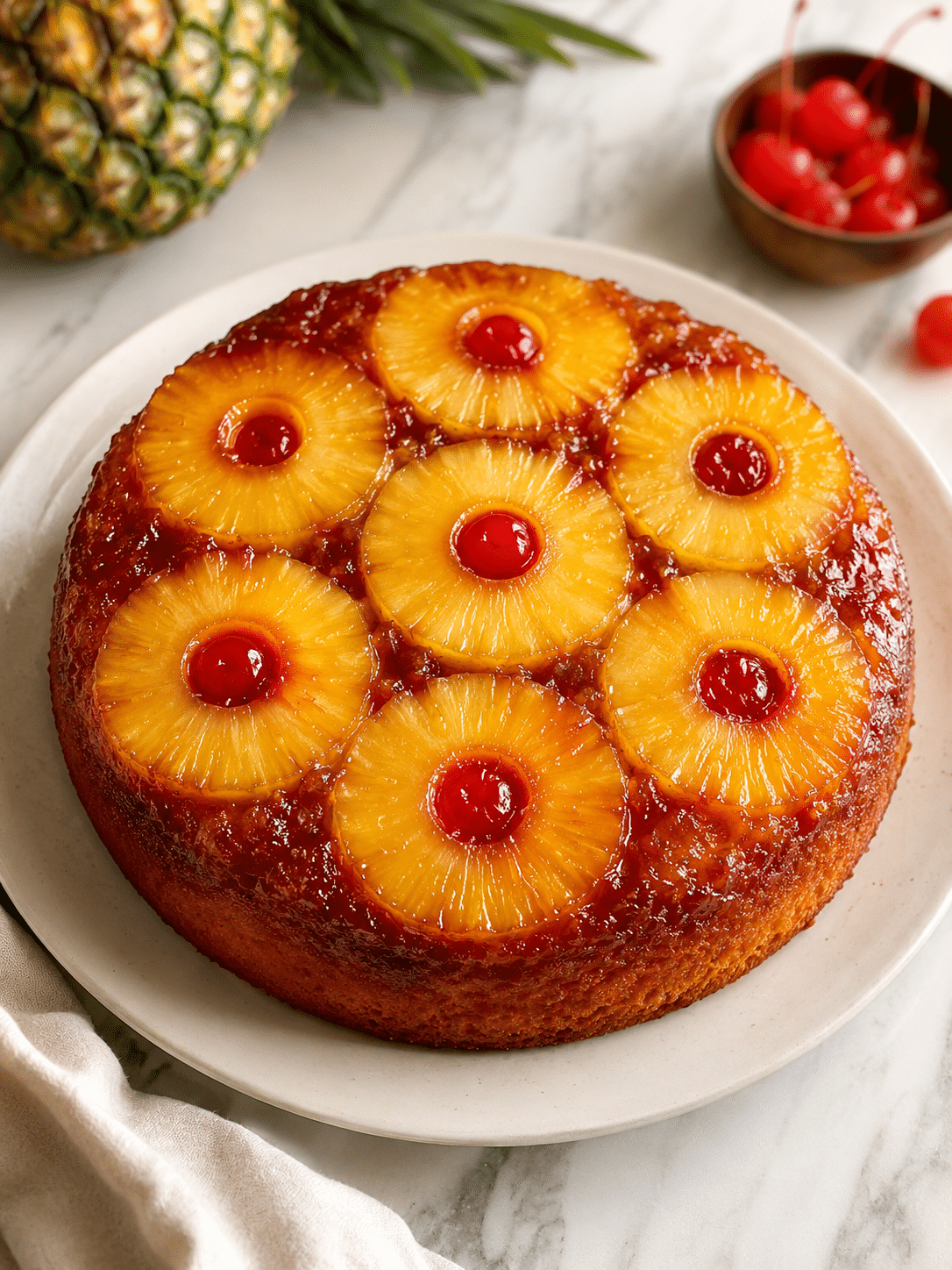
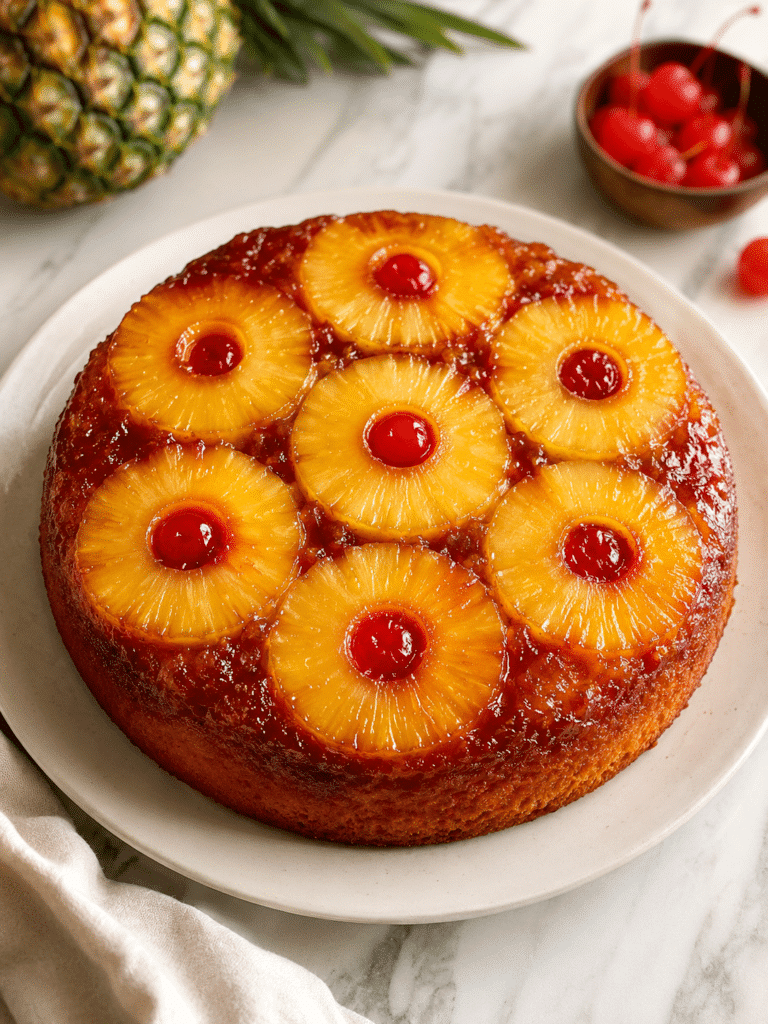
Pineapple Upside Down Cake is a buttery, tender 13×9 dessert baked over brown sugar, pineapple rings, and cherries, then flipped so the fruit becomes a glossy caramel topping. This from-scratch version gives you soft crumb, clean slices, and a warm bakery-style finish.
The first time I made Pineapple Upside Down Cake in my kitchen, I remember standing there with oven mitts on, holding my breath before the flip. That little pause says everything about this dessert. You know the cake smells good. You know the edges look buttery. But until you lift the pan, there’s that tiny kitchen thrill of wondering whether those pineapple rings will shine the way you pictured them.
After making this dozens of times, I’ve found that Pineapple Upside Down Cake rewards patience more than perfection. You don’t need fancy tools, frosting skills, or bakery training. You need melted butter, brown sugar, pineapple, cherries, and a soft vanilla cake batter that bakes up steady and tender. When it works, it lands on the table looking like you spent all afternoon fussing over it, even though the steps feel calm and homey.
This recipe is built for anyone craving pineapple upside down cake from scratch, especially the classic pineapple upside down cake from scratch 13×9 style that feeds a family, a church table, a birthday crowd, or one very lucky kitchen on a Sunday afternoon. I love a round skillet version too, but the 13×9 pan gives you even slices and plenty of caramelized topping in every piece.
The best thing about Pineapple Upside Down Cake is that the “decoration” happens before the batter goes in. The pineapple upside down cake ingredients are simple, but they do a lot. Butter and brown sugar make the sticky topping. Pineapple adds bright sweetness. Cherries bring that old-fashioned pop of color. A tender cake layer pulls everything together without stealing the show.
A reader named Marcy once told me, “Chef Lora, I made this for my dad’s birthday, and he said it tasted like the cake his mother made.” That’s exactly the feeling I want from this Pineapple Upside Down Cake. It’s familiar, but not flat. Sweet, but not heavy. Pretty, but not picky.
If you’re already in a fruit-dessert mood, you might also love my fresh peach cake when summer fruit is at its peak. But when you want a dessert that brings a golden top, soft crumb, and that classic flipped-cake moment, Pineapple Upside Down Cake is the one I’d put on the counter first.
Table of Contents
Key Takeaways
- Pineapple Upside Down Cake works best in a 13×9 metal pan because the topping spreads evenly and the cake bakes with a tender center.
- Blotting the pineapple helps the brown sugar topping stay glossy instead of watery.
- This is a pineapple upside down cake from scratch, so the crumb tastes buttery, soft, and homemade.
- You don’t need pineapple upside down cake with frosting because the caramelized fruit topping acts like a built-in glaze.
- Let the cake rest for 10 minutes before flipping, but don’t wait too long or the topping can stick.
- The recipe slices best when cooled for at least 30 minutes, though it’s wonderful slightly warm.
- Pineapple Upside Down Cake keeps well for a few days, making it a smart make-ahead dessert.
What Makes Pineapple Upside Down Cake From Scratch So Good?
Pineapple Upside Down Cake from scratch tastes better because the batter supports the fruit instead of hiding under it. A homemade vanilla cake gives you butter, real eggs, milk, and just enough structure to hold the juicy topping. The result feels tender, rich, and balanced.
Why does the topping matter so much?
The topping is the first thing you build, but it becomes the first thing everyone sees. In my kitchen, I start Pineapple Upside Down Cake with melted butter and brown sugar spread across the bottom of the pan. That mixture melts into the pineapple as the cake bakes, turning into a glossy caramel layer that tastes deeper than plain sugar. Light brown sugar gives a mellow sweetness, while dark brown sugar makes the topping taste more like molasses. Either one works, but I usually reach for light brown sugar when I want the pineapple flavor to stay bright.
The fruit needs a little care too. Canned pineapple rings are classic for Pineapple Upside Down Cake because they’re even, sweet, and easy to place. I drain them well, then blot them with paper towels. That one step keeps extra juice from thinning out the butter and sugar. You’ll still get a moist cake, but you won’t get a soggy top. Maraschino cherries add color and a familiar old-school look, but you can skip them or use pecans in the spaces if you want a less sweet finish.
Upside-down cakes bake with the fruit at the bottom and get turned over after baking, a style described in the Wikipedia overview of upside-down cake. That simple method is why Pineapple Upside Down Cake feels so special. The pan does most of the decorating work for you.
Which pan gives the best result?
For this Pineapple Upside Down Cake, I like a 13×9 pan because it gives the batter room to bake evenly. A glass baking dish can work, but metal usually gives cleaner edges and better heat transfer. If you use glass, watch the cake near the end because baking time can shift a bit. Grease the sides of the pan, even though the butter topping covers the bottom. Clean sides help the cake release during the flip.
This version also fits the search for best pineapple upside down cake recipe winner because it focuses on the details that decide whether the cake turns out neat or messy. The topping should bubble around the edges, the center should spring back lightly, and a toothpick should come out with a few moist crumbs. When those signs line up, your Pineapple Upside Down Cake will flip with confidence and slice beautifully.
If you enjoy cozy pan desserts with soft fruit and buttery edges, my peach and strawberry crumble brings that same warm, spoonable comfort in a different direction.
What Pineapple Upside Down Cake Ingredients Do You Need?
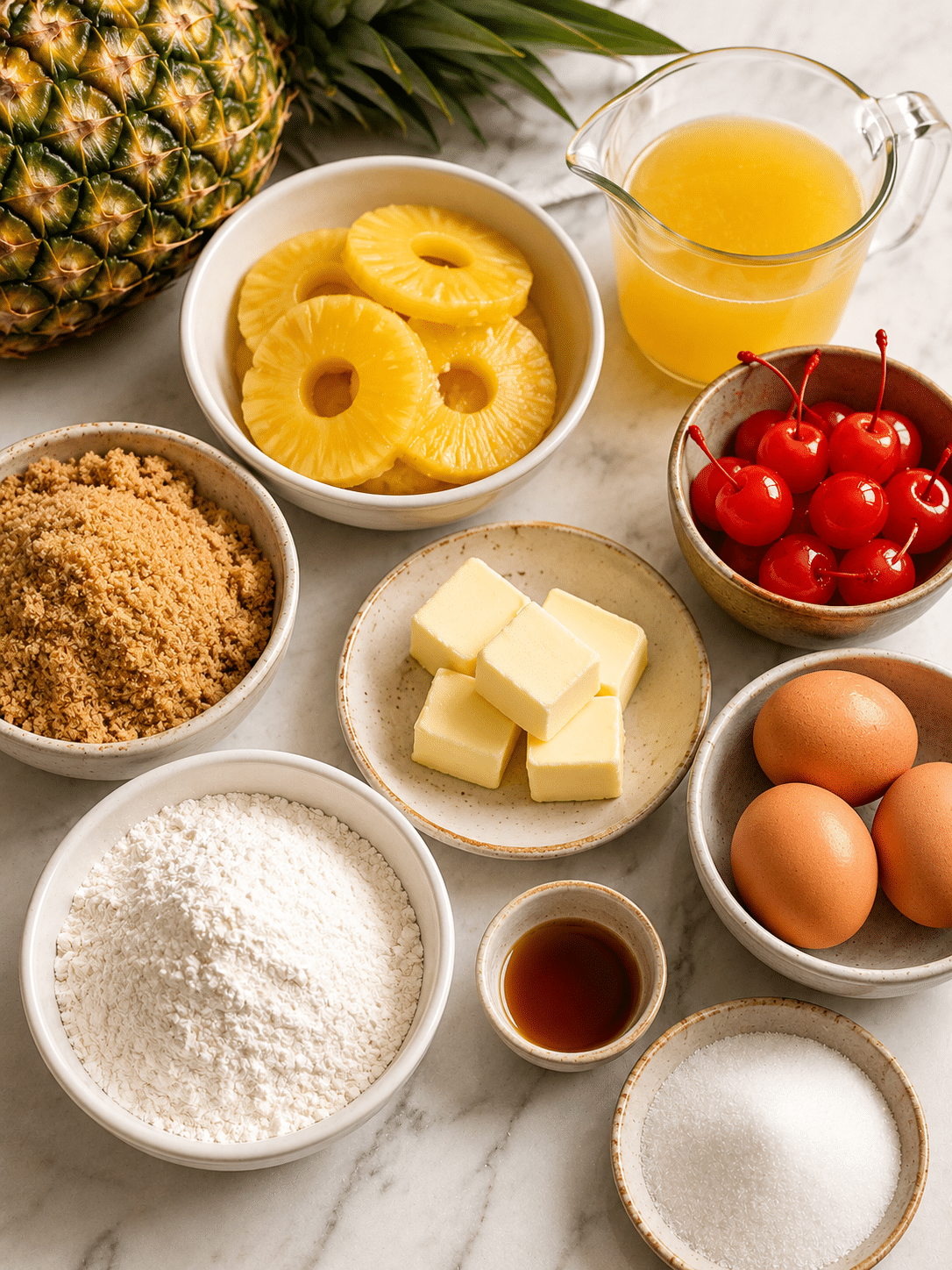
The main pineapple upside down cake ingredients are butter, brown sugar, pineapple rings, cherries, flour, baking powder, salt, sugar, eggs, vanilla, milk, and a little sour cream. Together, they make a glossy fruit topping and a soft cake that holds its shape when flipped.
What goes into the caramel fruit layer?
Every Pineapple Upside Down Cake starts with the bottom layer, even though it ends up on top. You’ll melt unsalted butter and pour it into the pan, then sprinkle brown sugar over it. I like to stir them just enough to make a sandy, buttery layer, but I don’t cook it first. The oven does that work. Pineapple rings go down next, followed by cherries in the centers and spaces.
For a 13×9 pan, you’ll usually need about 10 pineapple rings. Sometimes the can gives you a little more or less, so don’t stress if the pattern changes. Pineapple Upside Down Cake should look charming, not machine-made. If a ring breaks, tuck it near the edge. Once baked and flipped, those little imperfections rarely show.
| Topping Ingredient | Amount | Chef Lora Note |
|---|---|---|
| Unsalted butter, melted | 1/2 cup | Gives the topping richness |
| Packed light brown sugar | 1 cup | Makes the caramel-style glaze |
| Pineapple rings, drained and blotted | 20 oz can | Save 2 tablespoons juice for batter if desired |
| Maraschino cherries, drained | 15–20 | Classic color and sweetness |
| Pinch of salt | Small pinch | Balances the sugar |
That pinch of salt matters. Pineapple Upside Down Cake can lean sweet, especially with canned pineapple and cherries. A small pinch in the topping keeps it from tasting one-note.
How do you make the cake layer tender?
The cake batter should be thick enough to spread, but not stiff. Cream softened butter with granulated sugar until the mixture looks pale and fluffy. Beat in eggs one at a time, then add vanilla. Whisk flour, baking powder, and salt in a separate bowl. Add the dry mixture in turns with milk and sour cream. The sour cream gives Pineapple Upside Down Cake a soft crumb and helps it stay moist without turning heavy.
| Cake Ingredient | Amount | Why It Matters |
|---|---|---|
| All-purpose flour | 2 1/4 cups | Gives structure |
| Baking powder | 2 1/2 teaspoons | Helps the cake rise |
| Fine salt | 3/4 teaspoon | Balances sweetness |
| Unsalted butter, softened | 3/4 cup | Adds flavor and tenderness |
| Granulated sugar | 1 1/4 cups | Sweetens the crumb |
| Large eggs | 3 | Build structure and richness |
| Vanilla extract | 2 teaspoons | Rounds out the flavor |
| Whole milk | 1/2 cup | Loosens the batter |
| Sour cream | 1/2 cup | Keeps the crumb moist |
| Reserved pineapple juice | 2 tablespoons | Adds fruit flavor |
Pineapple Upside Down Cake
Equipment
- 13×9-inch baking pan
- mixing bowls
- electric mixer
- whisk
- Rubber spatula
- thin knife
- large serving tray or board
Ingredients
- 1/2 cup unsalted butter, melted
- 1 cup light brown sugar, packed
- 1 20 oz can canned pineapple rings, drained and blotted
- 15-20 maraschino cherries, drained
- 1 pinch salt
- 2 1/4 cups all-purpose flour
- 2 1/2 teaspoons baking powder
- 3/4 teaspoon fine salt
- 3/4 cup unsalted butter, softened
- 1 1/4 cups granulated sugar
- 3 large eggs
- 2 teaspoons vanilla extract
- 1/2 cup whole milk
- 1/2 cup sour cream
- 2 tablespoons reserved pineapple juice
Instructions
- Preheat the oven to 350°F. Grease the sides of a 13×9-inch baking pan.
- Pour the melted butter into the bottom of the pan. Sprinkle the brown sugar evenly over the butter, then add a small pinch of salt.
- Arrange the pineapple rings over the brown sugar layer. Place cherries in the centers of the rings and between the pineapple pieces.
- In a bowl, whisk together the flour, baking powder, and salt.
- In a separate large bowl, beat the softened butter and granulated sugar until light and fluffy.
- Add the eggs one at a time, mixing after each addition. Stir in the vanilla.
- Add the dry ingredients in three additions, alternating with the milk, sour cream, and pineapple juice. Mix just until the batter is smooth.
- Spoon the batter gently over the pineapple layer. Spread it evenly without moving the fruit.
- Bake for 38-45 minutes, or until the top is golden and a toothpick inserted near the center comes out with a few moist crumbs.
- Let the cake rest in the pan for 10 minutes.
- Run a thin knife around the edges. Place a large serving tray or board over the pan, hold firmly, and flip in one steady motion.
- Let the pan sit upside down for about 1 minute, then lift it off carefully. Cool slightly before slicing.
Notes
Nutrition
This homemade batter separates Pineapple Upside Down Cake from boxed versions. It tastes richer, cuts cleaner, and holds up under that buttery topping. If you like tender cakes with a soft crumb, my sour cream coffee cake uses sour cream in a similar way for a cozy breakfast-style bake.
How Do You Make Pineapple Upside Down Cake Step by Step?
Pineapple Upside Down Cake comes together by layering melted butter, brown sugar, pineapple, and cherries in the pan, then spreading vanilla cake batter over the fruit. Bake until golden, rest briefly, and flip while the topping is still warm enough to release cleanly.
How do you build the pan before baking?
Heat the oven to 350°F. Grease the sides of a 13×9 metal baking pan. Pour melted butter into the bottom, then scatter the brown sugar evenly over it. I use my fingertips or the back of a spoon to spread the sugar into the corners. That corner coverage matters because those edge pieces of Pineapple Upside Down Cake often become everyone’s favorite.
Place the pineapple rings over the sugar layer in neat rows. Put a cherry in the center of each ring and a few between the rings if you like that classic bakery-window look. At this point, don’t press the fruit too hard. You want it nestled into the topping, not buried. If you came here after searching pineapple upside down cake Martha Stewart or pineapple upside down cake Pioneer Woman, this is where most classic versions agree: the fruit layer should be simple, even, and pretty before the batter arrives.
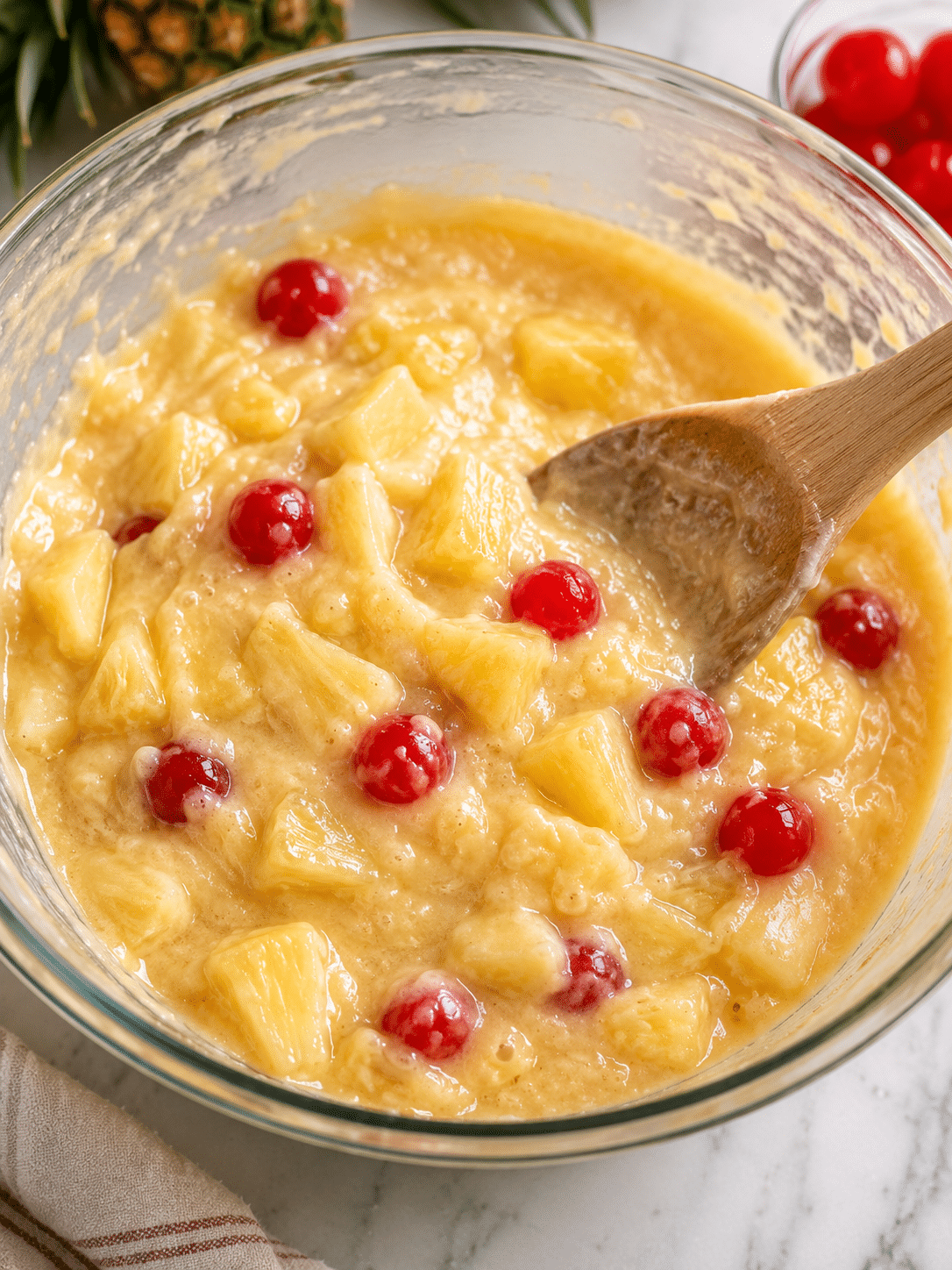
For the batter, beat softened butter and sugar until fluffy. This step gives Pineapple Upside Down Cake a lighter texture, so don’t rush it. Add eggs one at a time and scrape the bowl. Stir in vanilla. Add the flour mixture in three additions, alternating with milk, sour cream, and pineapple juice. Mix just until the batter comes together. Overmixing can make the cake dense, and this dessert tastes best when the crumb stays soft.
How long should it bake and rest?
Spoon the batter over the fruit, then spread it gently. I like to drop batter in several mounds across the pan before smoothing it out. That way, I don’t drag the pineapple rings out of place. Bake Pineapple Upside Down Cake for 38 to 45 minutes, or until the top turns golden and a toothpick inserted near the center comes out with moist crumbs.
Let the cake rest in the pan for 10 minutes. This wait lets the topping settle, but the caramel remains warm enough to release. Run a thin knife around the edges. Place a large serving board or rimmed tray over the pan, hold both firmly, and flip in one steady motion. Let the pan sit upside down for 60 seconds before lifting it away. If a pineapple ring sticks, just set it back in place. No one will complain.
One reader, Denise, wrote, “I was nervous about the flip, but it came out in one piece, and my family thought I bought it from a bakery.” That’s the kind of Pineapple Upside Down Cake win I love. It’s dramatic without being difficult.
For another dessert with a fruit-forward finish and a little kitchen drama, my double crust peach cobbler is the one I make when I want bubbling fruit tucked under golden pastry.
How Do You Keep Pineapple Upside Down Cake Moist, Neat, and Flavorful?
The best way to keep Pineapple Upside Down Cake moist is to blot the fruit, measure flour correctly, use room-temperature dairy, and pull the cake from the oven when the center has just set. A short rest before flipping keeps the topping glossy and clean.
Why does texture sometimes go wrong?
Most problems with Pineapple Upside Down Cake come from too much liquid, too much flour, or too much mixing. Pineapple brings juice, and that’s part of the charm, but extra juice can make the topping slide or soak the crumb. Blotting the rings is not a fussy step. It’s the quiet trick that keeps the top shiny rather than wet. I also drain the cherries well because cherry syrup can stain the topping and add more sweetness than the cake needs.
Flour can cause trouble too. Spoon it into the measuring cup and level it off instead of scooping straight from the bag. Packed flour makes Pineapple Upside Down Cake dry and firm. Once the dry ingredients go into the bowl, mix gently. You’re making cake, not bread, so stop as soon as the batter looks smooth.
Room-temperature ingredients help the batter blend without curdling. Butter should feel soft but not greasy. Eggs, milk, and sour cream blend better when they’re not cold from the fridge. After making this recipe for family gatherings and recipe testing days, I’ve found that those small habits make the biggest difference.
Can you make it ahead or serve it later?
Yes, Pineapple Upside Down Cake can be made ahead. It tastes best the day you bake it, but it still holds up well for two to three days. Cool it fully, cover it, and store it in the refrigerator if your kitchen is warm or if you’re keeping it longer than a few hours. According to the USDA’s food safety guidance, perishable leftovers should be refrigerated within two hours, which is a helpful rule for moist cakes with fruit toppings from USDA Food Safety.
To serve leftovers, let slices sit at room temperature for 15 to 20 minutes, or warm them gently in the microwave for a few seconds. Pineapple Upside Down Cake wakes right back up when slightly warm. The topping turns glossy again, and the crumb softens.
This cake also travels well if you keep it in the pan after cooling and flip it at the destination, but only do that when you have oven-warm timing on your side. For parties, I usually flip at home, cool the cake, then cover it lightly. If you want smaller fruit desserts for a tray or lunchbox, my peach cobbler cookies are a sweet little cousin to this kind of old-fashioned baking.
How Can You Serve Pineapple Upside Down Cake Without Frosting?
Pineapple Upside Down Cake does not need frosting because the brown sugar, butter, pineapple, and cherry topping becomes its own glossy finish. Serve it warm, room temperature, or chilled with whipped cream, vanilla ice cream, or a spoonful of lightly sweetened yogurt.
Does pineapple upside down cake with frosting make sense?
People search for pineapple upside down cake with frosting, and I understand why. Most celebration cakes have frosting, so it feels natural to wonder whether this one needs it. But Pineapple Upside Down Cake already has a built-in topping. Once you flip it, the fruit and brown sugar glaze sit right on top, giving you sweetness, shine, and decoration all at once.
If you want to dress it up, I’d skip heavy buttercream and add something light on the plate. Soft whipped cream is lovely. Vanilla ice cream melts into the warm topping. A spoonful of crème fraîche or Greek yogurt gives a tangy contrast. For a potluck, I cut Pineapple Upside Down Cake into squares and serve it just as it is because the top looks beautiful without extra work.
The flavor pairs nicely with coffee, black tea, or a glass of cold milk. For a summer dessert table, it sits well beside brighter fruit recipes too. My ginger peach cobbler bars bring a warm spice note that tastes wonderful next to pineapple.
What variations can you try?
You can make Pineapple Upside Down Cake your own without losing the classic feel. Add a little cinnamon to the batter for warmth. Swap a few cherries for pecan halves if you like crunch. Use pineapple chunks instead of rings for easier slicing, though rings give the prettiest top. Add shredded coconut to the batter for a tropical note, but keep it modest so the crumb stays tender.
If you want a taller cake, don’t add more batter to the same pan. Use the recipe as written, or the center may struggle to bake before the edges darken. If you want a smaller cake, halve the ingredients and use an 8-inch square pan, watching the bake time closely.
There’s also room to have fun with the common typo pineapple upside dien cake. If you typed that in a hurry while craving dessert, you still landed in the right place. Pineapple Upside Down Cake has been bringing people to the kitchen for generations, no perfect spelling required.
When peaches are in season, my peach yogurt cake with cinnamon glaze is another soft, tender cake that feels right for brunch, dessert, or an afternoon slice with coffee.
FAQ
What is the secret to the best Pineapple Upside Down Cake?
The secret to the best Pineapple Upside Down Cake is controlling moisture before the cake goes into the oven. Drain the pineapple rings well, blot them dry, and drain the cherries too. That keeps the brown sugar and butter topping thick enough to turn glossy instead of watery. The second secret is using a tender homemade batter with butter, eggs, milk, and sour cream. Sour cream gives the crumb moisture without making it loose. Finally, flip the cake after a 10-minute rest, not right away and not an hour later. That timing lets the topping settle while it’s still warm enough to release from the pan.
Can I make Pineapple Upside Down Cake from scratch 13×9 the day before?
Yes, you can make Pineapple Upside Down Cake from scratch 13×9 the day before serving. Bake it, flip it, cool it fully, then cover it lightly and refrigerate it. The flavor stays sweet and buttery, and the topping often tastes even deeper the next day. For the best texture, bring the cake to room temperature before serving, or warm individual slices for a few seconds. I don’t suggest leaving the cake in the pan overnight before flipping because the topping can stick as it cools. Flip it while warm, then store it after the topping has set.
Why did my Pineapple Upside Down Cake stick to the pan?
Pineapple Upside Down Cake usually sticks when the pan sides weren’t greased, the cake cooled too long before flipping, or the brown sugar topping cooked onto a dry spot in the pan. Grease the sides even though the bottom has butter. After baking, let the cake rest for about 10 minutes, run a thin knife around the edges, and flip it while the topping is still warm. If one pineapple ring stays behind, lift it gently with a spatula and place it back on the cake. It will blend into the topping, and the slice will still taste wonderful.
Is Pineapple Upside Down Cake better with canned or fresh pineapple?
Canned pineapple rings are best for classic Pineapple Upside Down Cake because they are evenly sliced, reliably sweet, and easy to arrange in a 13×9 pan. Fresh pineapple can work, but it needs to be sliced thinly and evenly so it softens during baking. Fresh pineapple also varies in sweetness and juiciness, so the topping can change from cake to cake. When I want the nostalgic look with rings and cherries, I use canned pineapple. When I want a less traditional version, I use thin fresh pineapple pieces and accept that the top will look more rustic.
Can I freeze Pineapple Upside Down Cake?
You can freeze Pineapple Upside Down Cake, but the topping will soften after thawing. For best results, cool the cake fully, cut it into squares, and wrap each piece tightly. Place the wrapped slices in a freezer-safe container and freeze for up to two months. Thaw slices in the refrigerator, then let them come to room temperature or warm them gently. I prefer freezing extra slices rather than a whole cake because individual pieces thaw more evenly. If you’re baking for guests, fresh is better, but frozen leftovers still make a happy little dessert later.
What should I serve with Pineapple Upside Down Cake?
Pineapple Upside Down Cake tastes lovely on its own, but it also pairs well with vanilla ice cream, whipped cream, lightly sweetened yogurt, or hot coffee. If the cake is warm, ice cream melts into the brown sugar topping and makes the whole plate taste extra cozy. For a dessert table, serve it with another fruit dessert that has a different texture, like my peach delight icebox cake for a cool, creamy contrast. Since this cake already has a sweet topping, keep sides simple. You don’t need frosting or a heavy sauce.
Conclusion
Pineapple Upside Down Cake is one of those recipes that reminds you why simple baking never goes out of style. You build the beauty first with butter, brown sugar, pineapple, and cherries, then cover it with a soft homemade batter and let the oven do the rest. The flip feels exciting every time, but the method is steady once you know the rhythm.
What I love most about this Pineapple Upside Down Cake is how generous it feels. A 13×9 pan gives you enough slices for family dinners, potlucks, birthdays, holidays, and “just because” weekends. It looks bright and cheerful on the table, but it doesn’t ask you to pipe frosting, stack layers, or fuss with decorations. The topping is the decoration.
Make it once, and you’ll learn the small things that matter: blot the pineapple, cream the butter well, spread the batter gently, and flip while warm. Make it twice, and it starts to feel like your own. If your kitchen is ready for a golden, buttery dessert with old-fashioned charm, try this Pineapple Upside Down Cake and serve it with pride.